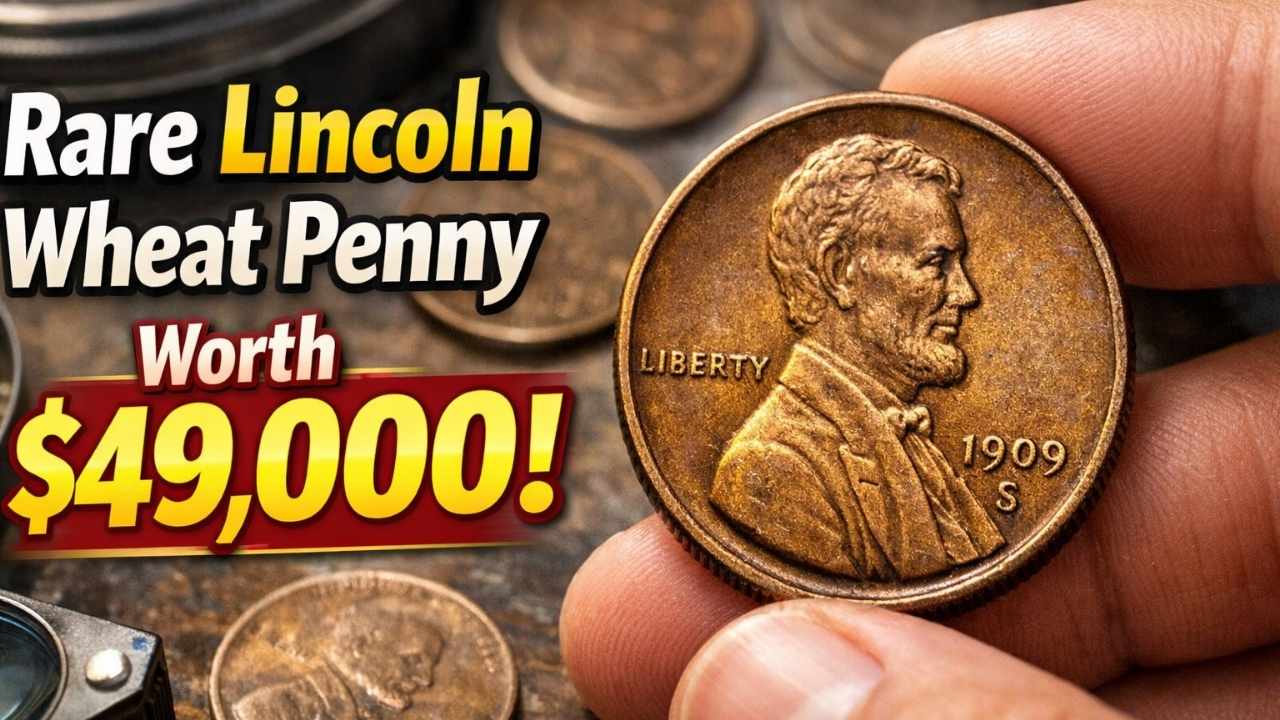
Rare Lincoln Wheat Penny Worth $49,000: The Lincoln Wheat Penny is one of the most fascinating coins in American numismatic history. Minted from 1909 to 1958, it carries both historical and collectible value. While most Wheat Pennies are worth only a few cents, certain rare editions can command staggering prices. Among them, the 1914-D Lincoln Wheat Penny stands out, with pristine examples valued at nearly $49,000. This raises an exciting question: could such a coin still be hiding in circulation today?
The Birth of the Lincoln Wheat Penny
The Lincoln Wheat Penny was introduced in 1909 to honor the 100th anniversary of Abraham Lincoln’s birth. Designed by Victor David Brenner, it was the first U.S. coin to feature a real person rather than a symbolic figure. The reverse design, with two wheat stalks, symbolized prosperity and growth. This coin marked a turning point in American coinage, blending artistry with national pride.

Why Some Wheat Pennies Are Rare
Several factors contribute to the rarity of certain Wheat Pennies:
- Limited Mintage: Some years and mint locations produced very few coins.
- Mint Errors: Mistakes during production created unique variations.
- Historical Significance: Coins tied to important events or transitions often gain value.
- Survival Rate: Many coins were lost, melted, or damaged, reducing the number of surviving examples.
The Legendary 1914-D Lincoln Wheat Penny
The 1914-D penny, minted in Denver, is one of the most coveted coins in the series. Only about 1.2 million were produced, and far fewer survive today in collectible condition. High-grade examples can reach values of $49,000, making it a true treasure for collectors. Even worn versions can fetch hundreds or thousands of dollars.

Could It Still Be in Circulation?
While most rare coins are quickly identified and removed from circulation, there remains a slim possibility that one could still be out there. Coins often sit in jars, drawers, or piggy banks for decades before resurfacing. Stories of rare coins discovered in everyday transactions continue to inspire collectors. Though unlikely, the chance of finding a 1914-D penny in circulation adds excitement to the hunt.
How to Identify a Rare Lincoln Wheat Penny
Collectors rely on specific details to spot valuable Wheat Pennies:
- Mint Mark: Look for small letters under the date. The “D” indicates Denver, “S” for San Francisco, and no mark for Philadelphia.
- Date: Certain years are rarer than others, such as 1909-S VDB, 1914-D, and 1922 No D.
- Condition: Coins are graded from Poor to Mint State. Higher grades mean higher value.
- Errors: Double dies, off-center strikes, and other mistakes can increase value dramatically.
Value Comparison Table
Here is a table showing approximate values of notable Wheat Pennies:
| Year & Mint | Value in Good Condition | Value in Mint State |
|---|---|---|
| 1909-S VDB | $700 – $1,500 | $2,000 – $3,500 |
| 1914-D | $200 – $2,500 | $20,000 – $49,000 |
| 1922 No D | $500 – $1,500 | $10,000 – $25,000 |
| 1931-S | $50 – $100 | $150 – $300 |
| Common Dates | $0.05 – $1.00 | $5 – $20 |
The Thrill of Coin Collecting
Coin collecting is more than a hobby; it is a journey through history. Each coin tells a story of its time, from economic struggles to national celebrations. The possibility of discovering a rare coin in everyday life adds excitement. Many collectors began their journey after stumbling upon a Wheat Penny in pocket change or an old family collection.

Investment Potential of Rare Coins
Rare coins like the 1914-D Wheat Penny are not only collectibles but also investments. Their value tends to rise over time, especially for coins in high grades. Collectors and investors alike see them as tangible assets that preserve history while offering financial growth.
Conclusion
The Lincoln Wheat Penny remains a beloved piece of American history. While most are worth only a few cents, rare editions like the 1914-D can reach values of $49,000. Though the odds are slim, it is still possible that such a coin could be found in circulation today. For collectors and enthusiasts, the thrill of the hunt continues, reminding us that treasures can sometimes be hidden in plain sight.