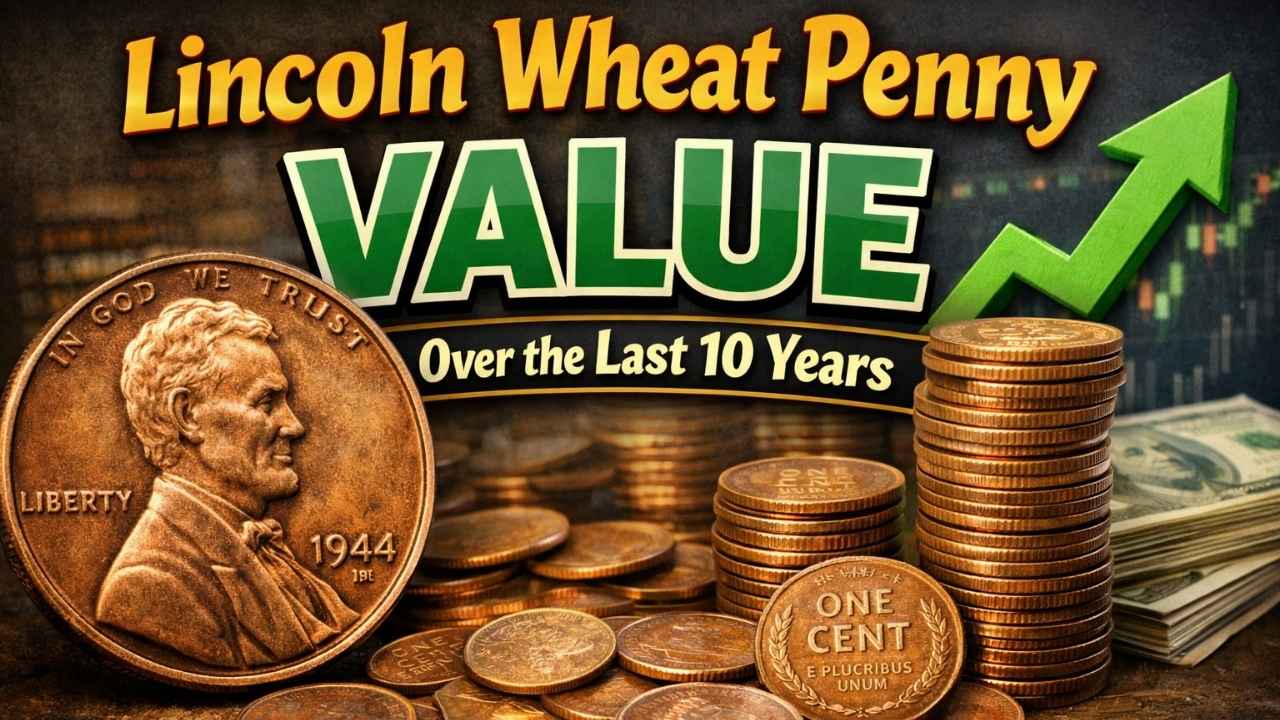
Lincoln Wheat Penny Value Over the Last 10 Years: The Lincoln Wheat Penny is one of the most iconic coins in American numismatics. Minted from 1909 until 1958, it represents a blend of artistry, history, and collectability. While many Wheat Pennies are common and worth only a few cents, certain rare dates and mint marks have steadily increased in value over the past decade. This guide explores how values have shifted in the last 10 years, what factors drive those changes, and how collectors can use this information to build or refine their collections.
Historical Background
The Wheat Penny was introduced in 1909 to celebrate the centennial of Abraham Lincoln’s birth. Victor David Brenner designed the coin, which became the first U.S. coin to feature a real person. The reverse design, with two wheat stalks, symbolized prosperity and growth. For nearly 50 years, the coin circulated widely, becoming a staple of American pocket change.

Factors That Influence Value
Several elements determine the value of Wheat Pennies:
- Mintage Numbers: Coins with lower production runs are generally more valuable.
- Mint Marks: Denver (D) and San Francisco (S) mint marks often carry premiums compared to Philadelphia issues.
- Condition: Coins are graded on a scale from Poor to Mint State. Higher grades command higher prices.
- Collector Demand: Popularity among collectors drives market trends.
- Errors and Varieties: Coins with minting errors or unique varieties can be worth significantly more.
Value Trends Over the Last 10 Years
The past decade has seen steady appreciation in the value of rare Wheat Pennies. Common dates have remained relatively stable, while key rarities have shown notable growth. Auction records and collector demand have pushed prices upward, especially for coins in Mint State condition.
Table: Value Trends of Key Wheat Pennies (2015–2025)
| Coin & Mint | Value in 2015 (Good Condition) | Value in 2025 (Good Condition) | Value in 2015 (Mint State) | Value in 2025 (Mint State) |
|---|---|---|---|---|
| 1909-S VDB | $600 – $1,200 | $700 – $1,500 | $1,800 – $3,000 | $2,000 – $3,500 |
| 1914-D | $150 – $2,000 | $200 – $2,500 | $15,000 – $35,000 | $20,000 – $49,000 |
| 1922 No D | $400 – $1,200 | $500 – $1,500 | $8,000 – $20,000 | $10,000 – $25,000 |
| 1931-S | $40 – $80 | $50 – $100 | $120 – $250 | $150 – $300 |
| Common Dates | $0.05 – $0.50 | $0.05 – $1.00 | $3 – $10 | $5 – $20 |
Collector Insights
Over the last decade, collectors have increasingly viewed Wheat Pennies as both historical artifacts and investment opportunities. Online marketplaces, coin shows, and auctions have seen rising demand, particularly for high-grade examples. The thrill of discovering rare coins in circulation or inherited collections continues to inspire new enthusiasts.
Investment Potential
Rare Wheat Pennies have proven to be strong investments. Coins like the 1914-D and 1922 No D have shown consistent appreciation over the past ten years. While common dates remain inexpensive, they still hold sentimental and historical value, making them accessible entry points for new collectors. For investors, focusing on key rarities in high grades offers the best potential for long-term growth.
The Role of Coin Grading
Professional grading services have played a significant role in shaping values. Coins certified by organizations such as PCGS or NGC often command higher prices due to the assurance of authenticity and condition. Over the past decade, the premium for graded coins has increased, reflecting the importance of trust in the numismatic market.
Famous Auction Sales
Several Wheat Pennies have made headlines in auctions over the last 10 years. High-grade examples of the 1914-D and 1922 No D have sold for tens of thousands of dollars, reinforcing their status as key rarities. These sales highlight the enduring appeal of Wheat Pennies and their potential as investment-grade collectibles.

Conclusion
The Lincoln Wheat Penny remains a cornerstone of American coin collecting. Over the last decade, values have steadily risen for key rarities, while common dates have remained stable. For collectors, understanding these trends is essential to building a meaningful and potentially profitable collection. The ultimate guide to Wheat Penny values over the past ten years shows that these coins continue to captivate enthusiasts and investors alike, blending history with opportunity.