
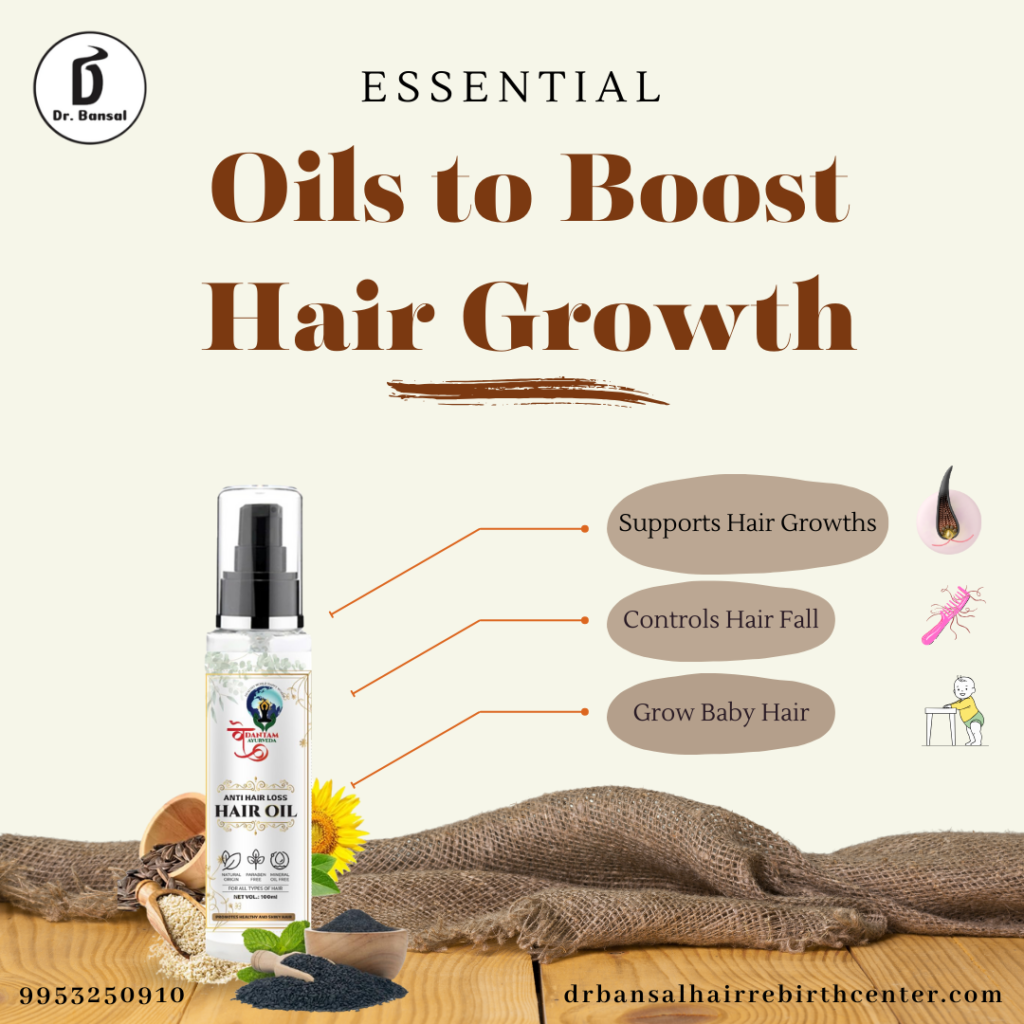
Essential Oils to Increase Hair Growth
By Dr. Bansal — Dr. Bansal Hair Rebirth Center (MZL 07/08 Sumedha Tower, Ansal Building, Ghaziabad 201002)
Thank you for reading this post, don't forget to subscribe!More than just a crown of beauty, hair frequently represents a very intimate aspect of who we are. Our confidence and sense of self might be shaken when our hair begins to thin, recede, or fall. At Dr. Bansal Hair Rebirth Centre, we think that in order to restore not just hair but also hope, science, tradition, and loving care should be combined. Essential oils are powerful botanical extracts that, when applied properly, may nourish your scalp, stimulate follicles, and create an environment where hair can develop. This is one of the oldest and most natural ways to assist healthy hair growth.
The most promising essential oils are covered in detail below, along with information on how to use them safely and reasonable expectations for results.
🌿 The Benefits of Essential Oils
Essential oils are concentrated plant extracts that include the volatile aromatic molecules that give flowers and plants their fragrance and many of their medicinal qualities, often known as the plant’s “essence.” Certain essential oils can be beneficial when applied to the scalp (in a safe, diluted manner):
Boost blood flow to hair follicles to better supply nutrients and oxygen.
The Indian Times +2
Healthline +2
Reduce inflammation and soothe irritated scalps.
Healthline +2
Trichology +2
Reduce dandruff, fungal, or bacterial accumulation, which can otherwise impede hair growth, by cleaning and maintaining a healthy scalp environment.
The Indian Times +1
In early-stage hair thinning or loss, stimulate follicular activity to perhaps awaken dormant follicles and promote thicker, stronger regrowth.
PMC +2.
India Today +2
Dermatologists advise against using essential oils as stand-alone “cures” for advanced hair loss, particularly if the loss is genetic or hormonal.
India Today +1
Rather, they are most effective when used in conjunction with medical care, healthy lifestyle choices, and targeted therapy as necessary.
India Today +1
⭐ Essential Oils That Promote Hair Development
These are the essential oils that are most frequently suggested for promoting hair growth or enhancing scalp health, and they have some scientific or anecdotal support.
Essential oil of rosemary
Why is it utilized? encourages blood flow to the scalp and could aid in the tissue’s cellular renewal.
The Indian Times +2
Trichology +2
What the research says: Although the trial was small, a 2015 human study that compared the benefits of rosemary oil to 2% minoxidil, a well-known drug for hair growth, reported a similar reduction in hair loss after six months.
India Today +2
Healthline +2
Ideal for: Individuals with inflamed scalps, early receding hairlines, or thinning hair.
Use: Combine a few drops with a carrier oil, such as olive, coconut, or jojoba. Gently massage the scalp, let it sit for 20 to 30 minutes (or overnight), and then wash it. Use two to three times a week.
Essential oil of peppermint
Why is it utilized? The chilling, tingling sensation that peppermint oil’s menthol produces is an indication that the scalp’s blood circulation has enhanced. Hair follicles may be stimulated and growth promoted by this “wake-up” effect.
Healthline
+1
According to a 2014 study on mice, peppermint oil spurred stronger hair development by increasing the quantity and depth of hair follicles.
Healthline +1
Ideal for: Those looking to stimulate sluggish follicles or those with a greasy or sensitive scalp.
How to apply: In a tablespoon of carrier oil, dilute two to three drops. After massaging the scalp for 20 to 30 minutes, rinse with shampoo. Start by using up to twice a week while assessing your scalp’s tolerance.
Essential oil of lavender
Why is it utilized? Lavender is well-known for its relaxing, antibacterial, and anti-inflammatory qualities. It also helps keep the scalp healthy and lowers stress, which frequently causes hair loss.
Healthline +1
According to the findings, mice’s hair growth was considerably increased by lavender oil in a 2016 animal study when compared to controls.
Herzindagi +1
Lavender is frequently used with other oils (such as rosemary) in human scalp research, and the results revealed increased hair thickness, density, and decreased hair loss.
PMC +1
Ideal for: People with sensitive scalps, hair loss brought on by stress, or scalp irritation problems.
How to use: Gently massage a few drops into the scalp after mixing them with a carrier oil, such as coconut or almond oil. After a half hour or overnight, wash. Use one or two times a week.
Cedarwood essential oil
Why is it utilized? may support a healthy environment for hair growth by balancing the scalp’s oil-producing glands and having antifungal and antibacterial properties.
The Indian Times +1
What the science says: Cedarwood oil, which is frequently combined with rosemary, lavender, thyme, and carrier oils, seemed to help lessen hair loss and promote regeneration in limited clinical studies, especially involving those who had patchy hair loss like alopecia areata.
Healthline +1
Ideal for: People with dandruff, imbalanced oil production, or fungal infections of the scalp.
How to use it: massage a few drops into your scalp with a carrier oil, let it sit for 20 to 30 minutes, and then shampoo. Use once or twice a week, or as directed by a dermatologist or trichologist.
Essential oil of tea trees
Why is it utilized? Tea tree oil, which has potent antifungal, antibacterial, and cleaning qualities, keeps the scalp clean by clearing debris and unclogging follicles that may otherwise prevent hair development.
The Indian Times +1
Evidence suggests that tea tree oil removes a common obstacle to healthy hair growth by promoting a clean, healthy scalp environment, even though it doesn’t directly stimulate hair follicles like rosemary or peppermint.
The Indian Times +1
Ideal for: Those who suffer from seborrheic dermatitis, dandruff, or accumulation or itching of the scalp.
How to use: Massage the scalp with just one or two drops diluted in a carrier oil. Before washing, wait 20 to 30 minutes. Because tea tree oil can be strong, use it sparingly.
🧴 A Comprehensive Guide to Safe Essential Oil Use
Due to their high concentration, essential oils can cause allergic responses, inflammation of the scalp, and other problems if not used properly. To minimize danger and maximize benefit:
Always dilute: Combine three to five drops of essential oil with one tablespoon of carrier oil (such as olive, coconut, jojoba, or almond oil).
The Indian Times +2
The Indian Times +2
Patch test first: Apply a little quantity to your inner forearm or behind your ear before applying the entire amount. Wait a day to see if there are any negative reactions.
Gently massage: Apply the mixture to the scalp with your fingertips. This promotes blood flow and facilitates the penetration of the oil.
Leave for a suitable amount of time: 20 to 30 minutes is ideal, but if your scalp can handle it, you can leave overnight. Next, use a gentle shampoo to wash.
It’s important to use it two to three times a week, not every day. Excessive use may aggravate hair loss by irritating the scalp.
India Today +1
Be consistent and patient: It takes time for hair to grow. You should anticipate waiting 8–12 weeks (or longer) to detect any benefit, even with consistent use.
Complement with healthy habits: A good scalp oiling regimen works best when combined with stress management, a balanced diet, good hair hygiene, and, in cases of severe hair loss, expert advice from a trichologist (like us at Dr. Bansal’s).
💡 What to anticipate—and what not to
Realistic benefits include thicker-looking hair, better texture and luster, less hair loss, and occasionally a little stimulation of dormant follicles, especially if hair thinning is recent.
What essential oils may and cannot do: Significant regrowth in cases of severe genetic hair loss, autoimmune-related patchy alopecia, or chronic baldness. In many situations, essential oils are supporting rather than curative.
India Today +2
India Today +2
Treatments may need to be combined: Essential oils can be used in conjunction with, not in place of, other focused treatments (medication, therapy, nutritional assistance) for advanced hair loss or medical disorders (such as autoimmune alopecia, hormonal imbalance).
🧪 How Dr. Bansal Hair Rebirth Center Uses Essential Oils: Our Method
At our Ghaziabad facility, we incorporate scalp treatments based on essential oils into a comprehensive hair-regrowth regimen. We usually utilize them as follows:
Scalp-Oil Massage Therapy: The scalp is gently rubbed with a mixture, usually rosemary + lavender (or rosemary + cedarwood), diluted in coconut or almond oil. The procedure nourishes follicles, increases circulation, and lessens irritation of the scalp.
Pre-Shampoo Treatment: To help hair follicles absorb nutrients and balance sebum production on the scalp, the oil is left on for 30 to 60 minutes before shampooing with a gentle, sulfate-free cleanser.
Scalp Hygiene Support: To cleanse and balance the flora on the scalp, we may use oils infused with tea tree or cedarwood (in a small, safe dilution) for clients who have dandruff, fungal problems, or flaking of the scalp.
Complementary Lifestyle & Nutritional Advice: We advise a balanced diet, stress reduction, gentle hair care techniques, and follow-up appointments because hair health is dependent on more than simply scalp care, particularly in situations like alopecia areata or totalis.
According on our clinical observations, clients who adhere to this regimen—which consists of twice-weekly oil massages, regular scalp care, and healthy habits—often see decreased hair loss, increased hair thickness and strength, and enhanced scalp comfort in as little as two to four months.
A Sample Recipe for a Do-It-Yourself Essential Oil Hair Growth Blend
This is a straightforward, beginner-friendly combination that you can make at home (though we advise doing so under supervision or following a patch test, particularly if you have sensitive skin):
Components:
One tablespoon of coconut, jojoba, almond, or olive carrier oil
Two drops of essential rosemary oil
Two drops of essential lavender oil
If your scalp can withstand cold sensations, add one drop of peppermint essential oil.
Approach:
In a small bowl, combine the essential oils and carrier oil.
Apply a small amount to your forearm and wait a day to perform a patch test. If there is no annoyance:
Divide your hair into parts, then use your hands to gently massage the blend into your scalp for five to ten minutes.
For 20 to 30 minutes, or overnight if your scalp can handle it, leave it on.
Use a gentle, sulfate-free shampoo to wash your hair.
Apply a nourishing conditioner after using this treatment twice a week.
Maintaining consistency is important! With consistent use and proper hair care techniques, results usually show up 8–12 weeks later.
🚨 Safety & Precautions: Things to Be Aware of
Undiluted essential oils can irritate, burn, or trigger allergic reactions if applied directly to the scalp.
India Today +1
Before using a patch for the first time, test it.
Steer clear of overuse—heavier or more frequent oiling may cause stress on the scalp and does not always accelerate growth.
India Today +1
Before using essential oils, see a dermatologist or trichologist if you have open wounds, severe dandruff, psoriasis, eczema, or scalp sensitivity.
Realistically monitor your progress because hair grows slowly and is influenced by a variety of factors, including genetics, stress, hormones, and diet.
🎯 Who Should Consider Essential-Oil Therapy — And Who Should Seek Professional Help
Good candidates for essential-oil scalp therapy:
People with mild to moderate hair thinning, increased hair fall, or early signs of receding hairline.
Those with scalp dryness, mild dandruff or irritation, wanting to improve scalp health.
Individuals seeking a natural, gentle, complementary method to support hair growth — especially as part of a broader hair care and lifestyle regimen.
Scenarios that need medical/trichologist intervention (in addition to or instead of essential oils):
Significant, sudden hair loss or pattern baldness.
Autoimmune hair loss (e.g. alopecia areata, totalis) or patchy hair loss.
Hormonal imbalance, scalp diseases, or other medical causes of hair fall.
At our centre, we strongly recommend that such cases be evaluated by a professional — so that treatment can be tailored (medications, therapies, lifestyle changes), and essential-oil therapy used as a supportive measure rather than standalone.
✨ Concluding remarks
A complete head of hair will not miraculously grow back overnight because essential oils are not magic. However, when applied correctly, they can have a significant impact by nourishing your scalp, reducing inflammation, boosting circulation, and improving the environment in which hair follicles can function.
Essential oil hair therapy can be compared to farming your scalp, providing it with the nourishment, nurturing, and conditions it needs to develop robust, thick hair. This natural, sensitive, and holistic method becomes a pillar of many of our clients’ hair-regrowth journeys at Dr. Bansal Hair Rebirth Centre.
If you would like, I can also send you a ready-to-print 2000-word piece that is perfect for your blog or brochure. The information will be enlarged, formatted, and customized for your website.
Do you want me to begin writing that for you right away?