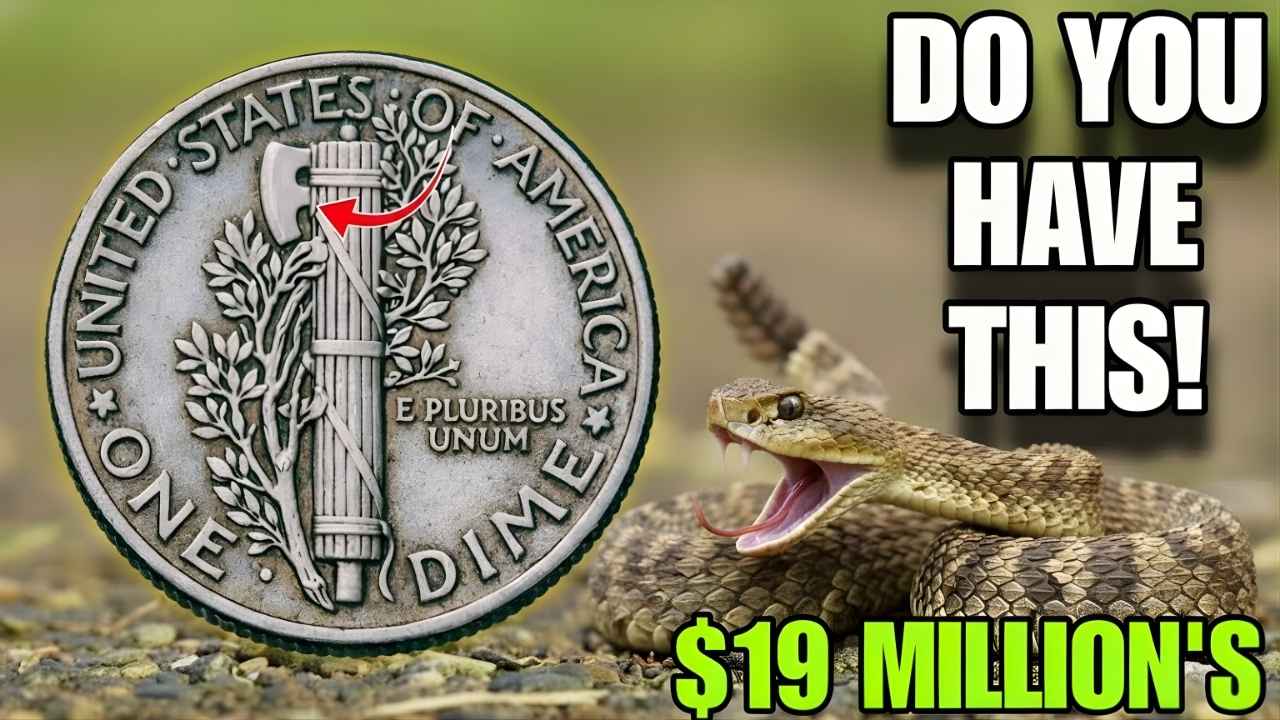
2026 Mercury Dime Value Guide: The Mercury Dime remains one of the most admired and actively collected coins in American numismatics. Officially known as the Winged Liberty Head Dime, this small silver coin has captured the attention of collectors for more than a century. In 2026, demand remains strong, especially for key dates, rare mint errors, and high grade certified examples.
One particular coin from this series has reached legendary status after selling for over 1.1 million dollars at auction, proving that even a ten cent piece can become a life changing discovery. Whether you are a beginner, an investor, or a serious collector, this complete 2026 value guide will walk you through prices, rare varieties, grading insights, and market trends shaping the Mercury Dime today.

The History of the Mercury Dime
The Mercury Dime was introduced in 1916, replacing the Barber Dime. It was designed by sculptor Adolph A. Weinman. The obverse features Liberty wearing a winged cap, symbolizing freedom of thought. Because the design resembles the Roman god Mercury, the nickname Mercury Dime quickly became popular and remains widely used.
The coin was struck from 1916 through 1945. Production ended shortly after the death of President Franklin D. Roosevelt, when the dime was redesigned to honor him.

All Mercury Dimes were minted in 90 percent silver, giving them intrinsic value beyond their face amount. This silver content continues to support prices in 2026.
Mercury Dime Silver Content and Melt Value
Every Mercury Dime contains:
90 percent silver
10 percent copper
0.0723 troy ounces of pure silver
Because of this silver composition, even heavily worn common dates carry a melt value tied to the current silver spot price. In 2026, silver prices remain firm, creating a stable price floor for the entire series.

For example, if silver trades at 30 dollars per ounce, the melt value of a Mercury Dime would be slightly above 2 dollars. This intrinsic value protects collectors from extreme downside risk.
2026 Mercury Dime Value Chart
Below is a detailed value chart reflecting average retail market prices in 2026. Values vary depending on condition, eye appeal, and certification status.

| Year | Mint Mark | Mintage | Circulated Value 2026 | MS65 Value 2026 | Notes |
|---|---|---|---|---|---|
| 1916 | P | 22.1M | $15 to $30 | $250 to $400 | First year issue |
| 1916 | D | 264K | $1,200 to $2,500 | $15,000 to $35,000 | Key date |
| 1917 | P | 55M | $12 to $25 | $150 to $300 | Common early date |
| 1921 | P | 1.2M | $100 to $300 | $4,000 to $7,000 | Semi key date |
| 1921 | D | 1.08M | $150 to $400 | $5,000 to $8,000 | Better mint scarcity |
| 1926 | S | 1.5M | $20 to $75 | $2,000 to $4,000 | Tough in high grade |
| 1931 | D | 1.2M | $15 to $40 | $250 to $500 | Lower mintage |
| 1942 | P | 205M | $3 to $6 | $40 to $80 | Overdate variety exists |
| 1942 | D | 60M | $3 to $6 | $35 to $75 | D over horizontal D variety |
| 1945 | P | 159M | $3 to $6 | $30 to $60 | Final year |
This table highlights how dramatically prices can change based on mint mark and condition. The 1916 D stands at the top of the regular issue series.
The 1916 D Mercury Dime and the 1.1 Million Dollar Example
The most famous coin in the Mercury Dime series is the 1916 D. With a mintage of only 264,000 coins struck at the Denver Mint, it immediately became scarce. Many were heavily circulated, making high grade survivors extremely rare.
One exceptional specimen graded at the very top of the condition scale sold for approximately 1.1 million dollars at auction. This record breaking sale demonstrated how rarity, demand, and superb preservation can combine to create extraordinary value.
The million dollar example was not just rare. It featured blazing luster, sharp strike details, and near flawless surfaces. Only a handful of such coins exist, making them prized trophies among elite collectors.
Rare Mercury Dime Errors and Varieties
Error coins and die varieties can significantly increase value. Some of the most sought after Mercury Dime varieties include:
1942 41 Over 42 Overdate
A visible overdate caused by reusing a die from the previous year. Strong examples can sell for thousands of dollars.

1942 D Over Horizontal D
A Denver mint mark punched over a previously misaligned D. This variety commands premiums in all grades.
1918 7 Over 8 San Francisco
Another dramatic overdate variety that attracts advanced collectors.

Off center strikes
Coins struck outside the collar, showing partial design. Value depends on percentage off center.
Broadstrikes
Coins struck without a retaining collar, resulting in a wider appearance.
Collectors in 2026 are increasingly submitting error coins for professional grading, which has strengthened market transparency and pricing consistency.
How Grading Impacts Mercury Dime Value
Condition plays a central role in price determination.
Good to Fine
Heavy wear, most design details flattened
Very Fine to Extremely Fine
Moderate wear but clear detail in Liberty’s hair and fasces bands
About Uncirculated
Light friction, nearly full luster
Mint State MS60 to MS65
No wear, varying levels of marks and strike quality
MS66 to MS68
Extremely rare for early dates and worth significant premiums
Full Bands designation
Coins with sharply defined horizontal bands on the fasces receive the Full Bands label. These coins are scarcer and often command much higher prices.
In 2026, registry competition has increased demand for high grade Full Bands examples, especially for better dates.
Collector Market Trends in 2026
Several key trends define the Mercury Dime market this year.
Strong demand for early 20th century silver coins
Growing interest among younger collectors entering through online auctions
Rising silver prices supporting base values
Increased focus on certified coins with population reports
High grade coins with Full Bands continue to outperform average examples. Additionally, key dates like 1916 D and 1921 issues remain highly liquid and desirable.
The Mercury Dime benefits from historical charm, artistic beauty, and a manageable series length, making it appealing to collectors at every level.
Investment Potential and Long Term Outlook
Mercury Dimes offer a combination of intrinsic silver value and numismatic scarcity. This dual support makes them attractive to both investors and collectors.
Key investment highlights in 2026:
1916 D remains the ultimate key date
1921 and 1921 D continue strong upward trends
Full Bands high grade coins show consistent premium growth
Rare overdate varieties maintain collector demand
While common circulated dates closely follow silver prices, better condition coins and scarce mintages show independent growth potential.
The series has already proven its ability to produce million dollar results at the highest levels. Although such examples are extremely rare, they highlight the long term strength of the market.
Tips for Buying Mercury Dimes in 2026
If you are building a collection this year:
Always verify authenticity for key dates
Consider professional grading for expensive purchases
Examine strike quality, especially fasces bands
Avoid cleaned or damaged coins
Track silver price trends
Patience and careful selection often produce better long term returns than quick impulse purchases.
Tips for Selling Mercury Dimes
When selling Mercury Dimes:
Group coins by date and mint mark
Separate key dates from common silver pieces
Monitor silver price spikes for bulk sales
Use reputable auction platforms for rare varieties
High grade certified coins typically achieve the strongest results when exposed to competitive bidding environments.
Why the Mercury Dime Remains Popular
The Mercury Dime combines historical significance, artistic design, and precious metal content. Designed by Adolph Weinman, the coin is often considered one of the most beautiful American coin designs ever produced.
Its relatively short production run from 1916 to 1945 makes completing a set challenging but achievable. This balance between accessibility and rarity keeps collectors engaged decade after decade.
In 2026, the series continues to perform well because it appeals to multiple types of buyers. Silver investors appreciate the intrinsic value. Traditional collectors value key dates and Full Bands examples. Advanced numismatists pursue rare errors and top population registry coins.
Final Thoughts on the 2026 Mercury Dime Market
The Mercury Dime stands as a cornerstone of American coin collecting. From common circulated pieces worth only a few dollars to the legendary 1916 D that crossed the 1.1 million dollar mark, the series offers a wide spectrum of opportunities.
The 2026 value landscape shows steady growth in key dates, strong performance in high grade Full Bands coins, and stable support from silver prices. Rare error varieties continue to attract specialized collectors, adding another layer of excitement.
Whether you are searching pocket change, attending coin shows, or bidding in major auctions, the Mercury Dime remains one of the most rewarding and historically rich coins to collect. With knowledge, patience, and attention to quality, this small silver coin can hold significant value well into the future.